

ASD Support
Helping you stop translating yourself and start being understood.
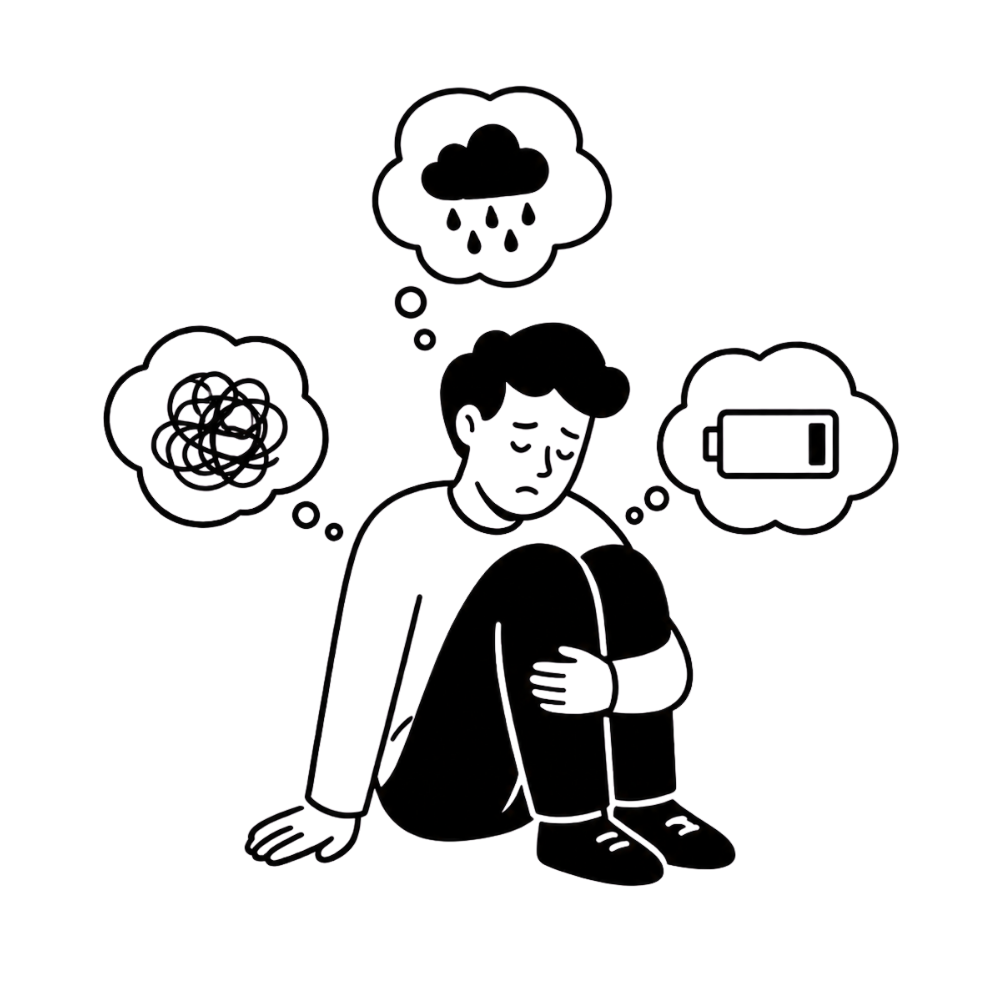
For a lot of autistic adults, it started with an awareness, a feeling, not a diagnosis.
The sense of watching other people navigate situations that required enormous effort to get through. The private mental math of every interaction. The way being around people could leave you someone completely depleted in a way that was genuinely hard to explain.
Many people carry that for years without a language for it. A diagnosis in adulthood can arrive with complicated relief, because if this is what was happening all along, it reframes a lot. Others never receive a formal diagnosis but recognize themselves clearly in the autistic experience and want support that actually fits.
There is nothing wrong with how the brain works. The struggle has been the absence of people and places that understand it. ASD support at Driftwood is for autistic adults who are ready to stop having to explain themselves and start being heard.
When Something Finally Has a Name
Self-recognition looks different for everyone. It might be a late diagnosis that reframes everything before it, school, relationships, work. Or a quieter recognition: hearing someone describe an experience and knowing immediately that it resonates with you.
What tends to surface in that moment:
The specific grief of understanding, in hindsight, what masking took
Relief mixed with something harder to name: anger, loss, or a complicated relationship to the years before
Questions about identity, who you are without all the adapting
Anxiety or depression that makes more sense now than it ever did before
ASD support can help when you are dealing with:
A late diagnosis and what it changes, and what it doesn't
Masking, and what it has cost across work, relationships, and family
Sensory and social demands that leave you depleted
Relationships where this part of you keeps getting missed
Partners and family trying to understand and connect
At some point, the adaptations that helped you survive stop fitting the life you're trying to live.

ASD Support Is Not About Fixing What Isn't Broken
Your brain is not the problem. It never was.
It has been navigating environments and expectations that were not built for it. Masking. Overfunctioning. Reading every room and person before you can relax. These were reasonable responses to a real mismatch.
We are not here to fix you. We are not experts handing down answers from above. We are guides. We get curious together about what these patterns have protected, and what they are costing you now.
This might feel uncomfortable, and that's okay. Part of the work is building enough safety to say what is actually going on.
Lived Experience Behind the Work
The team at Driftwood brings more than clinical training to this work. Joshua was diagnosed with autism and ADHD in adulthood, and is a parent to a child who is neurodivergent in how he processes the world. That shapes how he shows up with clients.
It does not appear here as a credential. It shows up in the questions he asks and the things you will not have to explain twice, the reframing, the grief, the relief, and the work of rebuilding a sense of self around something always true.
What Can Start to Change
Change is not immediate. It can look like finally having language for experiences that were hard to name. It can look like understanding which patterns came from adaptation, and deciding which ones you actually want to keep.
Over time, this work can help create more space for:
Relationships where the real version of you is present, not a managed one
Less energy going toward explanation
A clearer sense of what you need and how to ask for it
A different relationship to the diagnosis, one that feels clarifying instead of defining
No formal diagnosis is required. The starting point is what is actually happening, not the paperwork.
ASD Support in Barrie and Online Across Ontario
Driftwood Psychotherapy offers this work in person in Barrie, Ontario, and virtually across Ontario. Some people come in person because being in the room matters. Some start virtually because that's what makes the work possible. The right format depends on what you need.
Start Where You Are
If something keeps not working and you want to understand why, you don't have to have it figured out before you reach out. This is where the work begins.
Contact Driftwood Psychotherapy to book a consultation for ASD support in Barrie or virtual therapy across Ontario.
Questions About ASD Support
-
No. Some clients arrive with a diagnosis, some are pursuing one, and some have never been formally diagnosed but recognize themselves clearly as neurodivergent. The starting point is what is actually happening for you.
-
It can support you in making sense of your experience and what it changes about how you understand your history. It can help you name what masking has cost you, and get curious about who you are without it. It can also support the relationships around you, including partners and family members trying to understand and connect. Strategies matter, but they won't reach where the pattern actually lives. Understanding is the work.
-
We start by slowing things down enough to actually see what is going on. In session, we pay attention to what is happening in the body, in relationships, and in the patterns that keep repeating, and we ask questions that might feel uncomfortable, not to corner you, but because curiosity changes things. The work is relational: what happens between you and the people in your life matters as much as what you're doing on your own.
-
That is one of the most common things people say when they first reach out. A lot of therapy stays on the surface, and many clients leave feeling like they had to translate themselves the whole time without anything actually shifting. The work at Driftwood starts from what is actually happening in your body, your relationships, and your patterns, not just the presenting problem.
-
Yes. Driftwood Psychotherapy offers in-person sessions in Barrie, Ontario. Virtual therapy is also available across Ontario.
-
Yes. The relational dynamics that come with being autistic in a family or partnership are specific, and they matter. Partners and family members who are trying to understand and connect better are a meaningful part of the work here.
-
Individual therapy is $175 per session, HST included. A free 15-minute consultation is available. Many extended health benefit plans cover Registered Psychotherapist sessions. Clients submit for reimbursement directly.

Come as you are, not as you think you should be
If you’re tired of circling the same questions, schedule a consultation with Driftwood Psychotherapy. In-person therapy is available in Barrie, with virtual therapy across Ontario.